



Angiotensin-converting Enzyme (ACE)
Angiotensin-converting enzyme (ACE) indirectly increases blood pressure by causing blood vessels to constrict. ACE does that by converting angiotensin I to angiotensin II, which constricts the vessels. ACE, angiotensin I and angiotensin II are part of the renin-angiotensin system (RAS), which controls blood pressure by regulating the volume of fluids in the body. ACE is secreted in the lungs and kidneys by cells in the endothelium (inner layer) of blood vessels. It has two primary functions: ACE catalyses the conversion of angiotensin I to angiotensin II, a potent vasoconstrictor in a substrate concentration-dependent manner. ACE degrades bradykinin, a potent vasodilator, and other vasoactive peptides. These two actions make ACE inhibition a goal in the treatment of conditions such as high blood pressure, heart failure, diabetic nephropathy, and type 2 diabetes mellitus. Inhibition of ACE (by ACE inhibitors) results in the decreased formation of angiotensin II and decreased metabolism of bradykinin, leading to systematic dilation of the arteries and veins and a decrease in arterial blood pressure.
All Product Categories
-
Angiotensin-converting Enzyme (ACE) Inhibitors
(279)
View all products
-
Angiotensin-converting Enzyme (ACE) Antagonist
(1)
View all products
-
Angiotensin-converting Enzyme (ACE) Activators
(5)
View all products
-
Angiotensin-converting Enzyme (ACE) Modulator
(1)
View all products
-
Angiotensin-converting Enzyme (ACE) Chemical
(1)
View all products
-
Angiotensin-converting Enzyme (ACE) Control
(1)
View all products
-
Angiotensin-converting Enzyme (ACE) Substrates
(2)
View all products
-
ACE/CD143 Proteins
(1)
View all products
-
Angiotensin-Converting Enzyme 2 (ACE2) Proteins
(21)
View all products
-
Angiotensin-converting Enzyme (ACE) Related Products (335)
Related Products (335)

-
Recombinant Proteins (22)
-
Antibodies (3)
-
Moexipril hydrochloride (Standard)
 0 ImagesCat. No.: HY-B0378ARCAS No.: 82586-52-5Synonyms: RS-10085 (Standard)Moexipril (hydrochloride) (Standard) is the analytical standard of Moexipril (hydrochloride). This product is intended for research and analytical applications. Moexipril hydrochloride (RS-10085) is an orally active inhibitor of angiotensin-converting enzyme (ACE), and becomes effective by being hydrolyzed to moexiprila (hydrochloride). Moexipril hydrochloride exhibits antihypertensive and neuroprotective effects-.
-
Temocapril hydrochloride (Standard)
 0 ImagesTemocapril (hydrochloride) (Standard) is the analytical standard of Temocapril (hydrochloride). This product is intended for research and analytical applications. Temocapril hydrochloride is an orally active angiotensin-converting enzyme (ACE) inhibitor. Temocapril hydrochloride can be used for the research of hypertension, congestive heart failure, acute myocardial infarction, insulin resistance, and renal diseases.
-
Utibapril
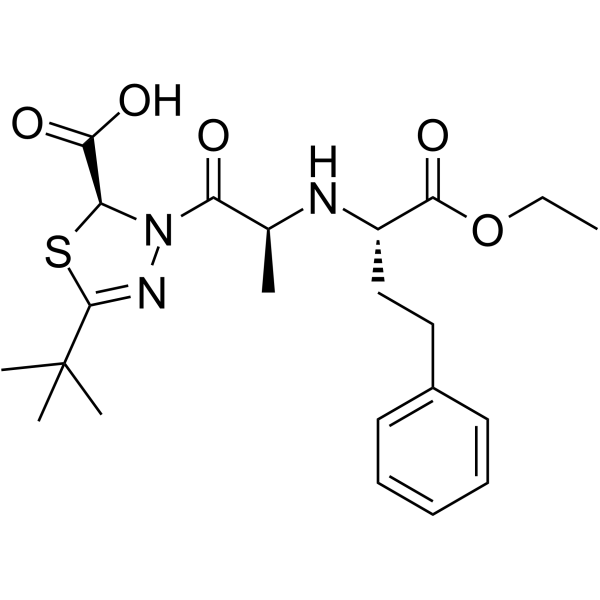 0 ImagesCat. No.: HY-101681CAS No.: 109683-61-6Synonyms: FPL 63547Utibapril is an angiotensin-converting enzyme (ACE) inhibitor with antihypertensive activities.
-
NCX899
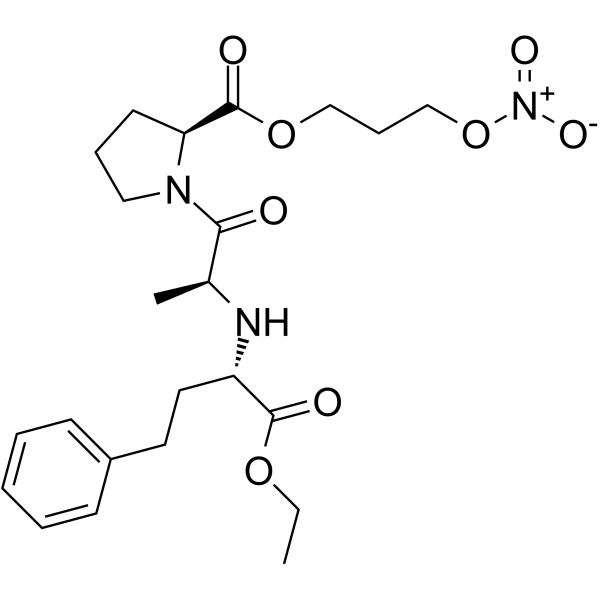 0 ImagesCat. No.: HY-101577CAS No.: 690655-41-5NCX899 is a NO-releasing derivative of enalapril, and shows inhibitory activity against angiotensin-converting enzyme (ACE) activity.
-
Dipeptide 2 (Standard)
 0 ImagesCat. No.: HY-118060RCAS No.: 24587-37-9Synonyms: N-Valyltryptophan (Standard); Val-Trp (Standard)Dipeptide 2 (Standard) is the analytical standard of Dipeptide 2. This product is intended for research and analytical applications. Dipeptide 2 (N-Valyltryptophan; Val-Trp) is a bioactive peptide with anti-aging effect and has been reported used as a cosmetic ingredient. Dipeptide 2 is an angiotensin-converting Enzyme (ACE).
-
CGS 13928C
 0 ImagesCat. No.: HY-105978CAS No.: 83348-78-1Synonyms: Wy-44655CGS 13928C (Wy-44655) is an angiotensin-converting enzyme (ACE) inhibitor. CGS 13928C effectively inhibits the pressor and blood pressure responses induced by exogenous angiotensin I by blocking the renin-angiotensin system. CGS 13928C exhibits dose-dependent hypotensive activity.
-
H-Ile-Trp-OH (Standard)
 0 ImagesCat. No.: HY-105858RCAS No.: 13589-06-5Synonyms: Ile-Trp (Standard)H-Ile-Trp-OH (Standard) is the analytical standard of H-Ile-Trp-OH (HY-105858). This product is intended for research and analytical applications. H-Ile-Trp-OH (Ile-Trp), a dipeptide, is an angiotensin-converting enzyme (ACE) inhibitor with an IC50 of 0.7 μM. H-Ile-Trp-OH inhibits predominantly the C-domain of ACE.
-
Alatrioprilat
 0 ImagesCat. No.: HY-117607CAS No.: 135038-59-4Alatrioprilat is an orally active inhibitor of angiotensin-converting enzyme (ACE) (IC50=19.6 nM; Ki=9.8 nM) and enkephailnase (IC50=6.1 nM; Ki=5.1 nM). Alatrioprilat plays a key role in the metabolism of hormonal peptides through the degradation of nitric oxide and atrial natriuretic factor (ANF). Alatrioprilat can be used in the study of cardiovascular diseases.
-
Diminazene aceturate (Standard)
 0 ImagesDiminazene (aceturate) (Standard) is the analytical standard of Diminazene (aceturate). This product is intended for research and analytical applications. Diminazene aceturate (Diminazene diaceturate) is an anti-trypanosome agent for livestock. The main biochemical mechanism of the trypanocidal actions of Diminazene aceturate is by binding to trypanosomal kinetoplast DNA (kDNA) in a non-intercalative manner through specific interaction with sites rich in adenine-thymine base pairs. Diminazene aceturate is also an angiotensin-converting enzyme 2 (ACE2) activator and has strong and potent anti-inflammatory properties.
-
Alacepril (Standard)
 0 ImagesCat. No.: HY-107318RCAS No.: 74258-86-9Synonyms: Cetapril (Standard); DU-1219 (Standard)Alacepril (Standard) is the analytical standard of Alacepril. This product is intended for research and analytical applications. Alacepril (Cetapril) is an orally active angiotensin converting enzyme (ACE) inhibitor with long lasting antihypertensive effect.
-
ε-Biotinamidocaproyl-β-alanyl-β-alanyl-lisinopril
 0 ImagesCat. No.: HY-165277CAS No.: 130007-47-5ε-Biotinamidocaproyl-β-alanyl-β-alanyl-lisinopril is an angiotensin-converting enzyme (ACE) inhibitor. Structurally, ε-Biotinamidocaproyl-β-alanyl-β-alanyl-lisinopril is a biotinylated derivative of lisinopril (HY-18206), with a chemical structure linking the biotin molecule and the lisinopril molecule composed of 19 atoms. ε-Biotinamidocaproyl-β-alanyl-β-alanyl-lisinopril can bind to both ACE and streptavidin (HY-P3152) simultaneously, making it possible to separate and purify ACE using streptavidin-agarose beads.
-
SQ 28853
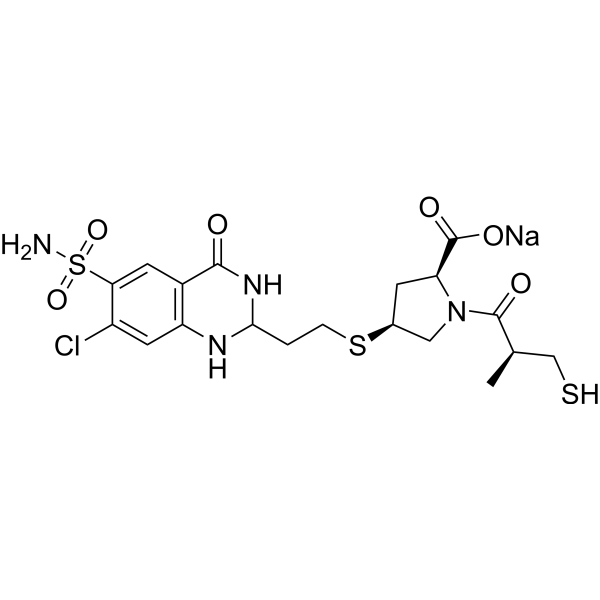 0 ImagesCat. No.: HY-113813CAS No.: 107550-68-5SQ 28853 is an angiotensin converting enzyme (ACE) inhibitor with potent diuretic activity. SQ 28853 can be used for the research of cardiovascular.
-
Vicenin 3 (Standard)
 0 ImagesCat. No.: HY-N4090RCAS No.: 59914-91-9Vicenin 3 (Standard) is the analytical standard of Vicenin 3. Vicenin 3 is an angiotensin-converting enzyme (ACE) inhibitor (IC50 = 46.91 μM) that can be isolated from the aerial parts of Desmodium styracifolium. Vicenin 3 ameliorates IL-1β-induced extracellular matrix degradation in SW1353 chondrocytes by regulating the MAPK pathway. Vicenin 3 can be used for the study of osteoarthritis (OA) and hypertension.
-
Imidapril hydrochloride (Standard)
 0 ImagesSynonyms: TA-6366 (Standard)Imidapril (hydrochloride) (Standard) is the analytical standard of Imidapril (hydrochloride). This product is intended for research and analytical applications. Imidapril hydrochloride (TA-6366) is an orally active dual inhibitor of angiotensin-converting enzyme (ACE) and MMP-9. Imidapril hydrochloride inhibits lipopolysaccharide-induced phosphorylation of c-Jun, MKK4 and JNK in monocytes, and downregulates the production of specific inflammatory factors such as TNF-α and IP-10, thereby exerting anti-inflammatory activity. Imidapril hydrochloride also effectively ameliorates mesangial expansion and reduces urinary albumin excretion by inhibiting angiotensin AngII production, lowering glomerular pressure and oxidative stress, thus delaying disease progression. Imidapril hydrochloride can also directly bind to the active site of MMP-9 to inhibit gelatinase activity, and suppress the enlargement of cerebral aneurysms without altering systemic blood pressure. Imidapril hydrochloride is widely applicable to related studies on autoimmune glomerulonephritis, diabetic nephropathy, cerebral aneurysms and other conditions.
-
MB-32
 0 ImagesCat. No.: HY-184485MB-32 is a potent and selective allosteric inhibitor of human angiotensin-converting enzyme 2 (hACE2) with a Kd value of 7.078 μM. MB-32 binds to a non-catalytic surface pocket on the N-terminal helix of ACE2, disrupts the interaction between ACE2 and the receptor-binding domain of SARS-CoV-2 spike protein through allosteric action, and preserves the enzymatic activity of ACE2 across different species. MB-32 achieves high concentrations in the airway via intranasal administration, with no detected cardiovascular toxicity. MB-32 can be used for research on coronavirus disease 2019.




